
April 27, 2026
Art in Transit: The Risks Involved in Transporting Artworks and the Importance of Comprehensive Insurance
How to protect works of art from damage, theft, and other risks during transport, installation, and exhibition.
Moving a work of art is never simply a matter of transporting an object from one place to another. Every painting, sculpture, design piece, installation, or private collection embodies economic, historical, cultural, and symbolic value. That is why, when a work leaves its usual location—whether for an exhibition, an art fair, restoration, sale, or institutional loan—it also enters a phase of heightened risk.
The global art market grew again in 2025. According to The Art Basel and UBS Global Art Market Report 2026, global art sales increased by 4% year-over-year and reached an estimated $59.6 billion. The report also notes that the volume of transactions reached approximately 41.5 million in 2025.
This trend confirms that, even amid a changing economic and geopolitical landscape, artworks continue to circulate among galleries, buyers, art fairs, museums, auction houses, and private collections. And every move raises a key question: What happens if the artwork is damaged, lost, or involved in an accident during transit?
Transportation: a critical stage for any work of art
Transporting art requires technical planning, specialized packaging, professional handling, environmental control, security, and traceability. Even so, the risk never completely disappears.
In fact, a report from the international insurance market indicates that approximately 60% of claims for damage to works of art are related to transportation. Among the most common factors are breakage, improper handling, and problems arising from non-specialized packaging or shipping.
This shows that the risk isn’t limited to major thefts or extraordinary incidents. Often, the most costly damage occurs in seemingly routine situations: a piece of artwork being unloaded from a truck, a box that wasn’t properly packed, vibrations during transport, a delay at customs, exposure to moisture or inappropriate temperatures, or an error during installation.
Major risks during the relocation of construction sites
1. Improper handling and packaging
Packaging is the first line of defense. Artwork that is not properly packed may suffer dents, scratches, chipping, warping, or breakage. This is particularly critical for fragile pieces, antique artworks, organic materials, sculptures, historical frames, or large-scale installations.
In art logistics, simply “handling with care” isn’t enough: specific protocols, appropriate materials, trained personnel, and a prior assessment of the artwork’s condition are required.
2. Changes in temperature and humidity
Artworks can be highly sensitive to environmental changes. Humidity, heat, cold, or sudden temperature fluctuations can cause cracking, warping, oxidation, material expansion, mold growth, or changes in pigments and supports.
A report commissioned by Arts Council England on international art loans identifies international transport, the use of air freight, in-person couriers, packaging, and strict environmental control parameters as key factors in the circulation of works from museums and galleries. It also notes that the transport of artworks and materials, along with strict environmental controls, ranks among the sector’s largest contributors to emissions.
Beyond the report’s environmental focus, the data confirms an important point from a risk management perspective: the conditions under which artworks are transported, stored, and displayed are an essential part of any operation involving artworks.
3. Theft, loss, or illicit trafficking
When a work of art is moved, its storage environment changes as well. It leaves a gallery, storage facility, museum, or private collection and passes through various modes of transport, temporary storage facilities, airports, transport routes, bonded warehouses, art fairs, or exhibition spaces.
The scale of the problem worldwide is significant: INTERPOL’s database of stolen works of art INTERPOL contains descriptions and images of nearly 57,000 stolen or missing objects, and is one of the leading international databases for combating illicit trafficking in cultural property.
For this reason, traceability, documentation, and securing adequate coverage are not mere afterthoughts: they are part of a comprehensive protection strategy.
4. Setup, display, and takedown
The risk doesn't end when the artwork arrives at its destination. Installation and dismantling are also critical stages. A piece can be damaged while being unpacked, hung, lit, handled during installation, or taken down at the end of an exhibition.
At art fairs, museums, galleries, and temporary exhibitions, a work of art passes through many hands, undergoes various movements, and traverses multiple spaces before returning to its point of origin. For this reason, adequate protection should not be limited solely to the physical transport route. Protection must account for the entire operational journey of the artwork.
Why get nail-by-nail insurance?
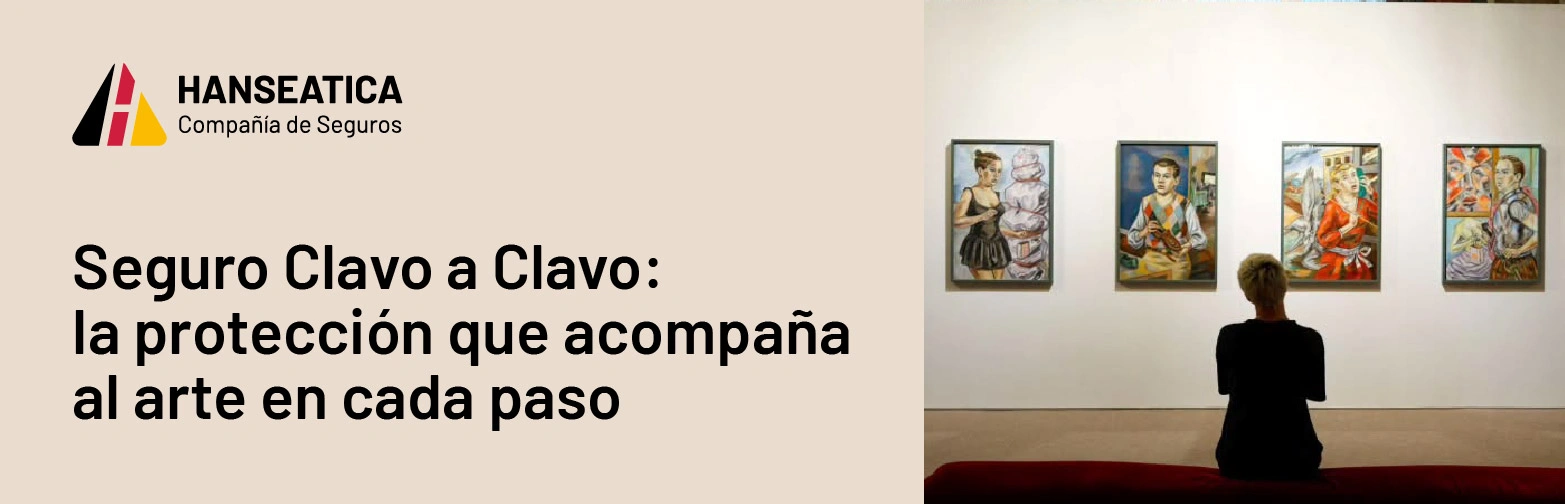
The nail-by-nail insurance is designed to accompany the artwork throughout its entire journey: from the moment it is removed from its original location until it returns to its place of origin or is installed at its destination. In other words, it provides protection far beyond just transportation.
This type of coverage is particularly relevant for:
- galleries that participate in art fairs or exhibitions;
- museums and cultural institutions that lend or receive works;
- private collectors who transport artworks;
- artists who submit works to exhibitions, competitions, or buyers;
- curators, cultural producers, and exhibition organizers;
- historical heritage, design pieces, sculptures, paintings, photographs, antiques, or installations.
As we discussed in our article on comprehensive coverage and coverage beyond transportation, this type of insurance covers the various stages of the artwork’s movement: removal, packing, transport, handling, installation, exhibition, dismantling, and return.
Coverage to protect economic, cultural, and symbolic value
When a work of art is damaged or lost, the impact is not measured solely in monetary terms. It can also affect a collection, an exhibition, an institutional relationship, an international loan, a sale, or an irreplaceable piece of cultural heritage.
That is why insuring a work of art requires a specialized approach. It is not simply a matter of applying standard coverage, but rather of understanding the nature of the piece, its declared value, its condition, the type of transport, the packaging, the destination, the duration of the exhibition, and the associated risks.
At this point, choosing a policy that covers each individual item isn't just an administrative decision: it's a way to stay one step ahead of the risks inherent in the art world. As we explained in our article on why to choose a comprehensive insurance policy, having specific coverage allows you to reduce financial exposure and operate with greater peace of mind throughout the entire process.
Hanseatica's Nail-by-Nail Insurance
In At Hansea we offer Clavo a Clavo Insurance designed to protect works of art, collections, and cultural heritage throughout their entire journey: transport, handling, installation, exhibition, dismantling, and return.
Our team takes a technical and personalized approach to support each cultural project according to its specific needs.
Are you planning to move a work of art, organize an exhibition, or insure a collection?
Learn more about our Clavo a Clavo Insurance and speak with a specialist to receive a customized quote.
Related articles

Seguro de Caución de Alquiler: ¿cuánto cuesta este tipo de cobertura?
Elegir una Garantía de Alquiler implica mucho más que evaluar su costo. Conocer cómo funciona, qué respaldo ofrece y en…

Why Choose Nail-to-Nail Insurance?
Hanseatica protects the symbolic, historical, and economic value of each artwork with this coverage, such as the 'Design...' exhibition.

Nail-to-Nail Insurance: the coverage that protects art beyond transport
Transporting a work of art is far more than moving a valuable object: it is mobilizing history, culture, and sensibility.…