
15/04/2025
How do natural disasters impact international trade, and what measures can businesses implement to mitigate these risks?
The Impact of Climate Change on Global Logistics and Solutions for More Resilient Transportation.
Climate change is no longer a future concern; it is present and directly impacts global logistics. From hurricanes devastating ports to heatwaves disrupting shipping routes, cargo transportation faces numerous challenges that jeopardize the stability of international trade.
However, an even more complex issue arises: the logistics industry is not only a victim of climate change but also contributes to global greenhouse gas emissions. It is estimated that freight transport accounts for approximately 8% of these emissions, rising to 11% when warehouses and ports are included (Ref).
While nearly three-quarters of global cargo is transported by transoceanic vessels, road vehicles, such as trucks and vans, account for the majority (65%) of freight transport emissions. Most vessels burn fossil fuels and emit carbon, yet they transport vast quantities of cargo simultaneously, making them the most efficient mode for freight movement.
However, road freight transport can emit over 100 times more CO₂ than ships for moving the same volume of cargo over the same distance. Road transport is also a rapidly expanding sector, with 80% of the global increase in diesel consumption attributable to trucks.
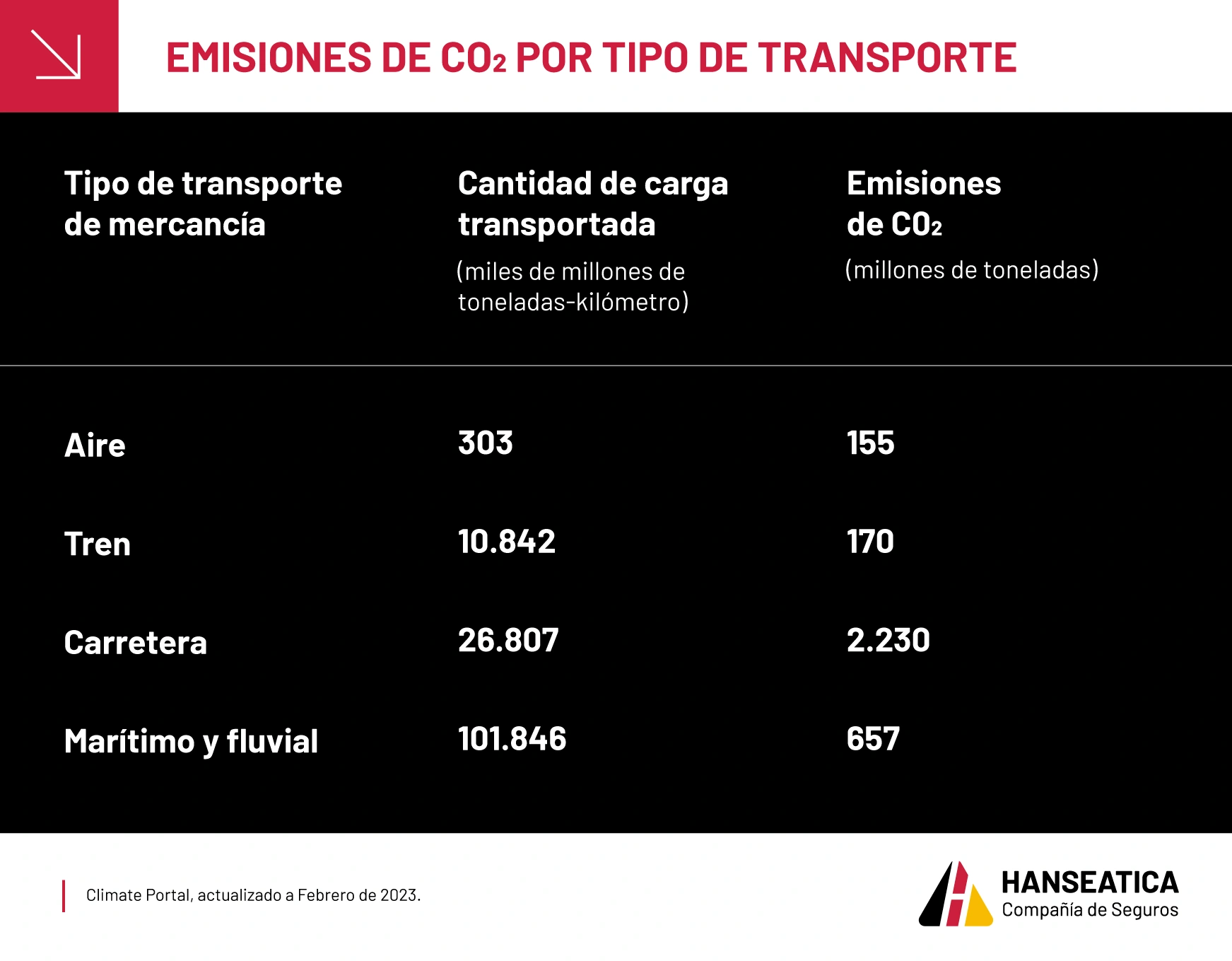
So, how can businesses protect themselves from the impacts of climate change while simultaneously reducing their own environmental footprint? In this article, we explore the primary climate threats to global logistics and the strategies companies in the sector are adopting to adapt, mitigate risks, and lead a transition towards a more sustainable and resilient model.
The Impact of Climate Change on Global Logistics
Climate change is no longer merely an environmental factor; it represents a direct threat to global logistics infrastructure. In recent years—and particularly throughout 2024—the escalating frequency and severity of extreme weather events have jeopardized the efficiency, predictability, and profitability of freight transport.
Prolonged droughts, devastating hurricanes, and disruptions to river and maritime routes have impacted everything from Latin American waterways to strategic corridors like the Panama Canal. These events not only cause temporary supply chain disruptions but also expose the fragility of a highly interconnected system that is more climate-dependent than previously understood.
Below, we explore some of the major climate events that directly impacted global logistics in 2024.
1. Extreme Weather Events: Transport Disruptions
Hurricane Milton in the United States (October 2024):
Hurricane Milton, which struck Florida's west coast in October 2024 as a Category 5 storm, caused severe disruptions to logistics and cargo transport. The Port of Tampa Bay suspended its maritime operations and closed navigation channels, impacting the ingress and egress of shipments. Intense rainfall and flooding rendered key roads impassable, blocking terrestrial distribution routes. In air transport, Tampa International Airport and other regional airports canceled flights, disrupting the air supply chain.
Furthermore, companies such as Kinder Morgan and Citgo shut down fuel terminals, interrupting the supply of gasoline and diesel to the state's interior.
Lessons Learned: This event highlighted the high vulnerability of the logistics system to extreme climatic phenomena and the urgent need for mitigation and resilience strategies to protect commerce.
Drought in the Panama Canal (August 2024):
A historic drought, exacerbated by the El Niño phenomenon, drastically reduced water levels in the Panama Canal, forcing the Canal Authority to restrict the number of daily vessel transits from the usual 36-38 to just 32 (Ref). Furthermore, permitted drafts were limited, compelling many vessels to reduce their cargo or seek alternative routes.
This measure not only directly impacted the flow of international trade, particularly in sectors such as energy, agriculture, and consumer goods, but also led to congestion in neighboring ports, increased transit times, and elevated global logistics costs. Economically, the canal was estimated to lose over $200 million in revenue in 2024, severely impacting the Panamanian economy.
Lessons Learned: This event highlighted the high vulnerability of the logistics system to extreme climatic phenomena and the urgent need for mitigation and resilience strategies to protect trade.
2. Vulnerable Infrastructure: Ports and Roads at Risk
Drought in the Paraná and Paraguay Rivers (2024):
Throughout 2024, a prolonged drought—also linked to the El Niño phenomenon—caused a significant drop in water levels in the Paraná and Paraguay rivers, two crucial fluvial arteries for cargo transport in the heart of the Southern Cone. The reduced water levels compelled barges to navigate with lighter loads to prevent grounding, thereby diminishing logistical efficiency and increasing export costs.
The fluvial ports of Rosario (Argentina) and Asunción (Paraguay), crucial for the export of agricultural products such as soybeans, corn, and wheat, operated below capacity. In many instances, exports had to be rerouted via land or temporarily stored, leading to bottlenecks and increased operational expenses.
Furthermore, the intensive use of land routes as an alternative exacerbated the deterioration of road infrastructure, particularly in the northern Argentine provinces and southern Brazil, where many routes were not equipped to handle such a volume of trucks. The loss of competitiveness for agricultural producers was significant, resulting in reduced profit margins and delays in the fulfillment of international contracts.
Lessons Learned: This episode highlighted the vulnerability of fluvial logistics to extreme climate events and reinforced the necessity to diversify transport modes, invest in dredging and channel maintenance, and develop insurance and contingency plans for future water crises.
Drought in the Colombian Amazon (2024):
In 2024, the Colombian Amazon experienced an unprecedented drought, deemed the most severe in over a century. Amazon River levels plummeted by up to 82%, severely impacting navigation and access to essential resources (Ref).
This drastic reduction in river flow isolated numerous indigenous communities that rely on the river as their primary transportation route. The disruption of fluvial routes hindered the supply of food, potable water, and medical provisions, exacerbating the vulnerability of these populations.
Lessons Learned: This extreme event underscored the urgent need to develop resilient infrastructure and climate change adaptation strategies for Amazonian communities. It also highlighted the importance of implementing contingency plans to ensure continuous access to essential services and transportation routes, even under adverse climatic conditions.
3. Shifts in maritime routes: new opportunities and challenges
Arctic Ice Melt (2024):
The progression of global warming once again presented alarming figures in 2024: Arctic sea ice extent reached one of its lowest recorded levels since satellite measurements began. This situation reignited the debate surrounding the commercial use of the Northeast Passage, a maritime route skirting Russia's northern coast and connecting Asia with Europe, reducing transit time by up to 40% compared to the Suez Canal.
The ice melt has rendered this route navigable for more months of the year — particularly during summer and part of autumn — and shipping companies are exploring its viability for transporting goods such as liquefied natural gas, oil, containers, and minerals. In fact, in 2024, a 25% increase in commercial activity was recorded in this area, according to data from the Arctic Institute.
However, these logistical advantages are accompanied by significant operational challenges and risks. Port infrastructure across the Arctic is limited, and extreme weather conditions remain unpredictable. Furthermore, the presence of floating ice fragments continues to pose a navigational hazard, necessitating the use of icebreakers and advanced satellite monitoring systems, thereby increasing operational costs.
From an environmental perspective, the escalating maritime activity in the Arctic raises serious concerns. Experts warn of the risk of fuel spills, the impact on local biodiversity, and increased emissions in an exceptionally fragile ecosystem. Organizations such as Greenpeace have indicated that the opening of these routes should not be viewed solely as an economic opportunity, but rather as a critical symptom of accelerated climate change.
In conclusion, while the Arctic ice melt may appear to be an opportunity to optimize global logistical routes, it also starkly reveals the environmental cost of this new era. Any initiative to utilize these routes must be accompanied by sustainability policies, strict regulations, and measures to mitigate climate impact.
Strategies to mitigate impact and adapt to climate change
Despite these challenges, many companies are adopting innovative strategies to reduce their vulnerability and minimize their environmental footprint.
1. More sustainable transport: Adoption of green technologies
- Fleet Electrification: Companies such as DHL and Amazon have already integrated electric trucks to reduce their carbon emissions and reliance on fossil fuels.
- Efficient and Certified Vessels: In 2024, Fred. Olsen Express launched over 90 sustainable projects, including two new cargo vessels with ISO 14001 certification, optimized for energy efficiency.
- Alternative Fuels: The use of biofuels and green hydrogen is gaining traction in maritime and air transport.
- Route Optimization: The use of artificial intelligence and data analytics enables the planning of more efficient routes, thereby reducing fuel consumption.
2. Resilient Infrastructure
One of the most effective strategies to mitigate the effects of climate change on logistics is to strengthen critical infrastructure. Investing in facilities designed to withstand extreme weather events not only reduces the risk of operational disruptions but also enhances emergency response capabilities.
- More Resilient Ports: Infrastructure projects such as storm barriers, improved drainage systems, and dock elevation are being implemented in vulnerable port areas. A notable example is the Port of San Antonio, Chile, which in 2024 allocated over USD 10 million to modernize its facilities, adapting them to storm surges and rising sea levels, with the aim of ensuring operational continuity in the face of extreme events.
- Roads Adapted to Extreme Heat: In regions prone to frequent heatwaves, more resilient materials are being utilized to prevent asphalt deformation and maintain road safety. These enhancements are crucial for terrestrial transport, particularly in agricultural areas and high-traffic routes.
- Secure Storage: Companies are relocating or constructing logistics centers in areas less exposed to natural disasters such as floods or landslides, while also integrating energy efficiency and climate resilience measures into their design.
3. Comprehensive Climate Risk Management: Planning, Technology, and Insurance Protection
Given the progression of climate change, risk management is no longer an option, but a strategic imperative for the operational continuity of logistics companies. The most resilient companies are those that integrate preventive planning, anticipatory technology, and specific insurance coverages.
- Proactive Contingency Plans: Establishing clear protocols for extreme climatic events enables rapid response to minimize damages and downtime.
- Logistical Diversification: Expanding the network of suppliers and transport routes reduces exposure to vulnerable areas and facilitates more agile responses to disruptions.
- Predictive Analytics and Real-time Monitoring: Tools based on artificial intelligence and climatic data enable the anticipation of phenomena such as storms or floods, allowing for real-time operational adjustments.
- Specialized Coverages: Climate insurance plays a pivotal role in risk management. It protects key assets—such as cargo, vehicles, and infrastructure—against events like hurricanes, wildfires, or extreme droughts.
Hanseatica: A Smart Solution for Climate Uncertainty
In this context, Hanseatica positions itself as a strategic ally, offering Cargo Insurance, Container Insurance and Liability Insurance, with a comprehensive and flexible approach that adapts to the new climatic context. With expert advice and personalized support, we help our clients operate with security and foresight in an increasingly volatile environment.
How Does Hanseatica Protect Logistics Companies?
- Natural Disaster Coverages: Protection against damage to cargo and transport due to hurricanes, storms, and floods.
- Liability Insurance: To cover third-party damages in the event of climatic incidents.
- Risk Management Advisory: We assist companies in implementing strategies for climate risk prevention and mitigation.
The logistics of the future will be greener, more resilient, and secured. Hanseatica is here to help you meet this challenge.
Conclusion
Climate change is a reality impacting global trade, but it also presents an opportunity to transform the logistics industry towards a more sustainable and secure model.
Companies that adopt clean technologies, resilient infrastructure, and risk mitigation strategies will be better prepared to face this challenge.
Is your company protected against the impact of climate change? Contact us! and discover how our insurance solutions can help ensure the continuity of your operations.
Related articles

Risks in Freight Transport in Chile: The 5 Challenges Companies Must Anticipate by 2026
How companies can anticipate key logistics risks and protect their supply chain in 2026.……
Strait of Hormuz: the new crisis shaking global trade and redefining risks in international logistics
Following a joint bombing by the United States and Israel on targets in Iran, and the subsequent death of the leader...
Technical Insurance: unexpected downtime and technical failures, the silent risk that can bring entire industries to a halt
Technical insurance helps cover unforeseen events that could interrupt operations. What does it cover, who does it apply to, and what does it involve?