
November 10, 2026
Mexico's Agri-Food Exports to the United States: Logistical Risks and Transportation Insurance During Peak Season
The increase in shipments of fresh produce from Mexico to the United States poses new challenges for international logistics. Border delays, maintaining the cold chain, and the responsibility of logistics operators make risk management critical during the peak season.
The export of agri-food products from Mexico to the United States is a strategic activity for regional trade. During periods of peak demand, the shipment of avocados, fresh tomatoes, and berries places greater demands on a logistics chain that must ensure speed, product preservation, and compliance with health inspections.
In this scenario, the international transport of perishable goods faces challenges that go beyond simply moving the goods. Delays at border crossings, breaks in the cold chain, incidents during transit, and the responsibilities of the various operators can compromise both the integrity of the cargo and the financial outcome of an operation.
Anticipating these risks and having appropriate protective measures in place is essential for exporters, importers, and freight forwarders involved in this trade corridor.
Agri-food exports: a logistics chain under pressure
Mexico holds a prominent position as a supplier of agricultural products to the United States. Avocados, fresh tomatoes, and berries are part of an export portfolio that requires specialized logistics operations to maintain their quality throughout the entire journey.
The seasonal nature of these products leads to periods of increased activity. As winter approaches in the Northern Hemisphere, Mexican exports of berries and certain vegetables become increasingly important in meeting U.S. demand.
This increase in shipments requires precise coordination among producers, exporters, carriers, freight forwarders, logistics operators, and importers. Each stage must be carried out under appropriate conditions regarding handling, temperature, documentation, and traceability.
In particular, refrigerated transport plays a central role. Maintaining proper storage conditions from origin to destination helps reduce product spoilage and preserve their commercial quality.
However, as the volume of operations increases, so does the exposure to unforeseen events that can disrupt delivery times and compromise the merchandise.
The Economic Impact of Mexican Agri-Food Exports
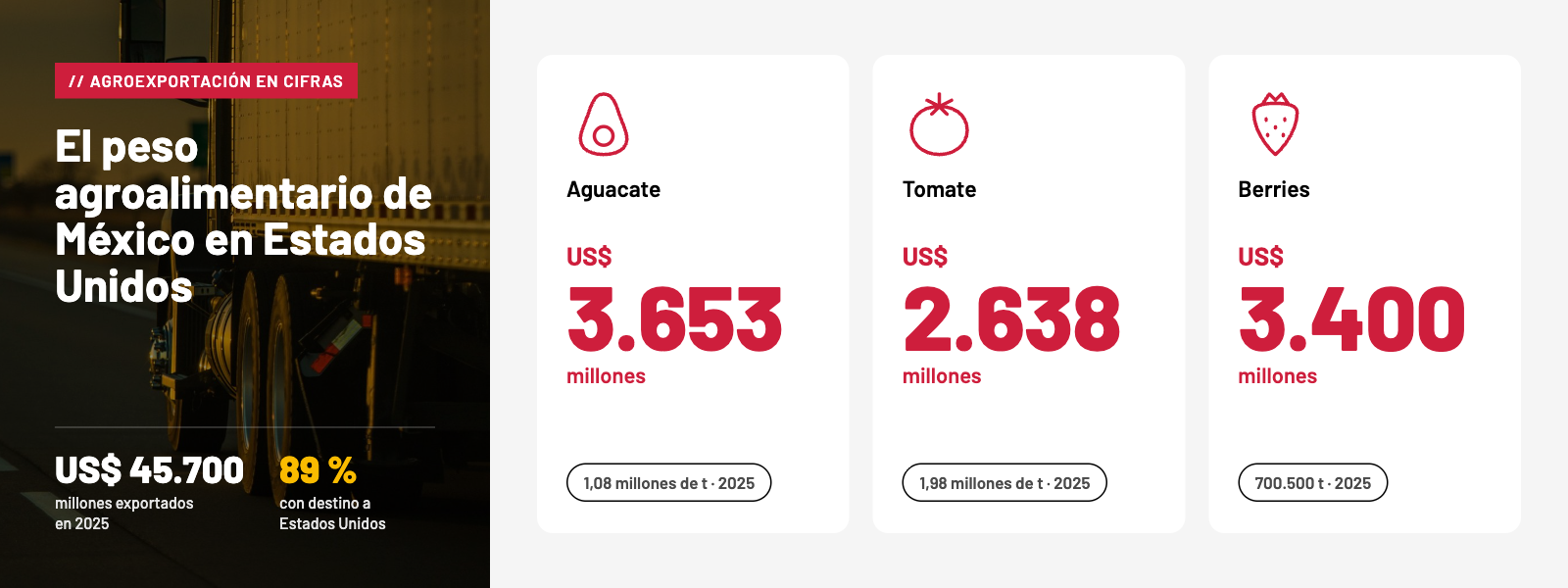
Agri-food trade between Mexico and the United States represents one of the main trade links in the regional agricultural sector. In 2025, Mexican agricultural and agri-food exports totaled approximately US$45.7 billion worldwide. The United States accounted for nearly 89% of that trade, cementing its position as Mexico’s primary export market.
Looking at some of the products involved in this operation, the figures give a sense of the scale of the transactions:
- Avocado: In 2025, Mexico exported to the United States approximately 1.08 million metric tons, worth close to US$3,653 million.
- Fresh tomatoes: shipments from Mexico to the U.S. market totaled nearly 1.98 million metric tons, with a value of US$2,638 million.
- Berries: Mexican exports of strawberries, raspberries, blackberries, and blueberries totaled approximately 700,500 metric tons and US$3.4 billion in 2025, according to USDA estimates. The United States remained the top destination.
These figures reflect the scale of a supply chain that moves millions of metric tons of fresh produce and requires specialized logistics infrastructure to ensure its preservation and delivery to its destination.
In this context, any disruption during transport can have significant economic consequences. Border delays, failures in refrigeration systems, or incidents along the route do not just affect a single shipment: they can compromise high-value business operations and lead to claims among the various participants in the supply chain.
The Main Risks Involved in Transporting Perishable Goods
The Main Risks Involved in Transporting Perishable Goods
Unlike other types of cargo, fresh agri-food products are particularly sensitive to shipping conditions. A delay or operational failure can have a direct impact on their quality, shelf life, and commercial value.
The main risks include:
1. Delays and inspections at border crossings
The border crossings between Mexico and the United States are critical points for the continuity of operations. Customs and health checks, additional inspections, and documentation issues can increase wait times for vehicles.
In the case of perishable goods, these delays require special attention. Prolonged delays at the border can increase the risk of refrigeration failures, lead to higher operating costs, and disrupt delivery schedules.
2. Cold-chain interruptions
Maintaining the correct temperature is one of the most critical aspects of agri-food transportation.
Failures in refrigeration equipment, temperature fluctuations, improper handling, or interruptions during loading and unloading operations can affect the condition of the products.
For produce such as avocados, tomatoes, and berries, these situations can accelerate the ripening process, cause spoilage, and result in commercial losses.
3. Theft, damage, and incidents during the trip
The security of goods also poses a challenge for cross-border operations. Theft, partial removal of products, accidents, and damage during handling can result in financial losses and affect compliance with trade commitments.
Freight Forwarders: Responsibilities in an International Operation
Multiple parties are involved in an agri-food export operation. Among them, freight forwarders play a key role in coordinating the various stages of international transportation.
Their involvement may include hiring carriers, planning routes, coordinating transfers, managing documentation, and tracking shipments.
This position within the logistics chain also entails exposure to risks and potential claims from third parties.
A failure to coordinate, a breach of contract, or an error in the operating instructions may lead to disputes regarding damage, loss, or delays in the delivery of goods.
For this reason, it is important for freight forwarders and logistics operators to identify the liabilities they assume in each operation and assess how to protect their assets against potential claims.
The operator’s liability and the value of the goods represent two different aspects of risk. While one relates to damage or loss that may affect the cargo, the other concerns the potential liability that may fall on those involved in the provision of logistics services.
How to Anticipate Risks During the High Season
A preventive approach requires addressing risks before the goods begin their journey. Some measures that help improve operational safety include:
- Plan for travel times: Take into account possible delays at border crossings and plan for operational alternatives.
- Check the refrigeration conditions: Check the equipment and establish temperature-monitoring procedures during transport.
- Review the documentation: Ensure that all customs and health requirements are met before shipping begins.
- Select reliable carriers and operators: Evaluate their experience, operational capacity, and safety procedures.
- Define contractual responsibilities: Clearly establish the obligations of each participant in the logistics chain.
- Evaluate insurance coverage: Identify the risks involved in the transaction and select solutions that are appropriate for the nature of the goods and the services provided.
Proactive planning and coordination among the various stakeholders help reduce exposure to unforeseen events and improve the ability to respond to potential contingencies.
What types of coverage can protect an agri-food export from Mexico to the United States?
Exporting perishable goods requires taking into account various risks throughout the logistics chain, from the preservation of the goods during transport to the responsibilities of those involved in the operation.
In this context, Hanseatica offers solutions designed to protect both the cargo and the operators involved in international transportation:
- Cargo Insurance: Provides coverage against loss or damage that may affect products during transport by land, sea, or air, in accordance with the policy terms.
- Container Insurance: Protects containers against damage and loss covered by the policy. This includes reefer units, which are used to transport goods that require controlled temperature conditions.
- Civil Liability Insurance for Logistics Operators: Provides coverage against third-party claims arising from liabilities related to logistics activities, subject to the policy’s terms and conditions. A valuable solution for freight forwarders and operators who coordinate the various stages of international transportation.
Each type of coverage addresses a different risk and provides a complementary approach to managing the risks associated with agri-food exports.
Safe exporting requires comprehensive risk management
The growth in Mexico’s agri-food exports to the United States reflects the importance of this trade corridor and the opportunities it offers the sector. At the same time, it highlights the need for logistics operations capable of meeting the demands of international transportation and preserving the integrity of the goods.
At Hanseatica, we understand that every business activity presents its own unique challenges. That’s why we offer customized solutions to help logistics operators meet those challenges.
Related articles
Year-End and Peak Shipping Season: Civil Liability That Logistics Operators Cannot Underestimate
The increase in commercial activity during the last few weeks of the year leads to greater demand for logistics services and puts…

Rental Bond Insurance vs. Landlord Guarantee: Which Is Better for Tenants and Landlords?
Whether you're looking for a place to live or offering a property for rent, choosing the right guarantee…

Technical and Industrial Insurance: How to Protect Machinery, Construction Sites, and Critical Equipment Against Failures or Unforeseen Events
From electronic equipment and contractor machinery to construction and installation projects, Technical Insurance…